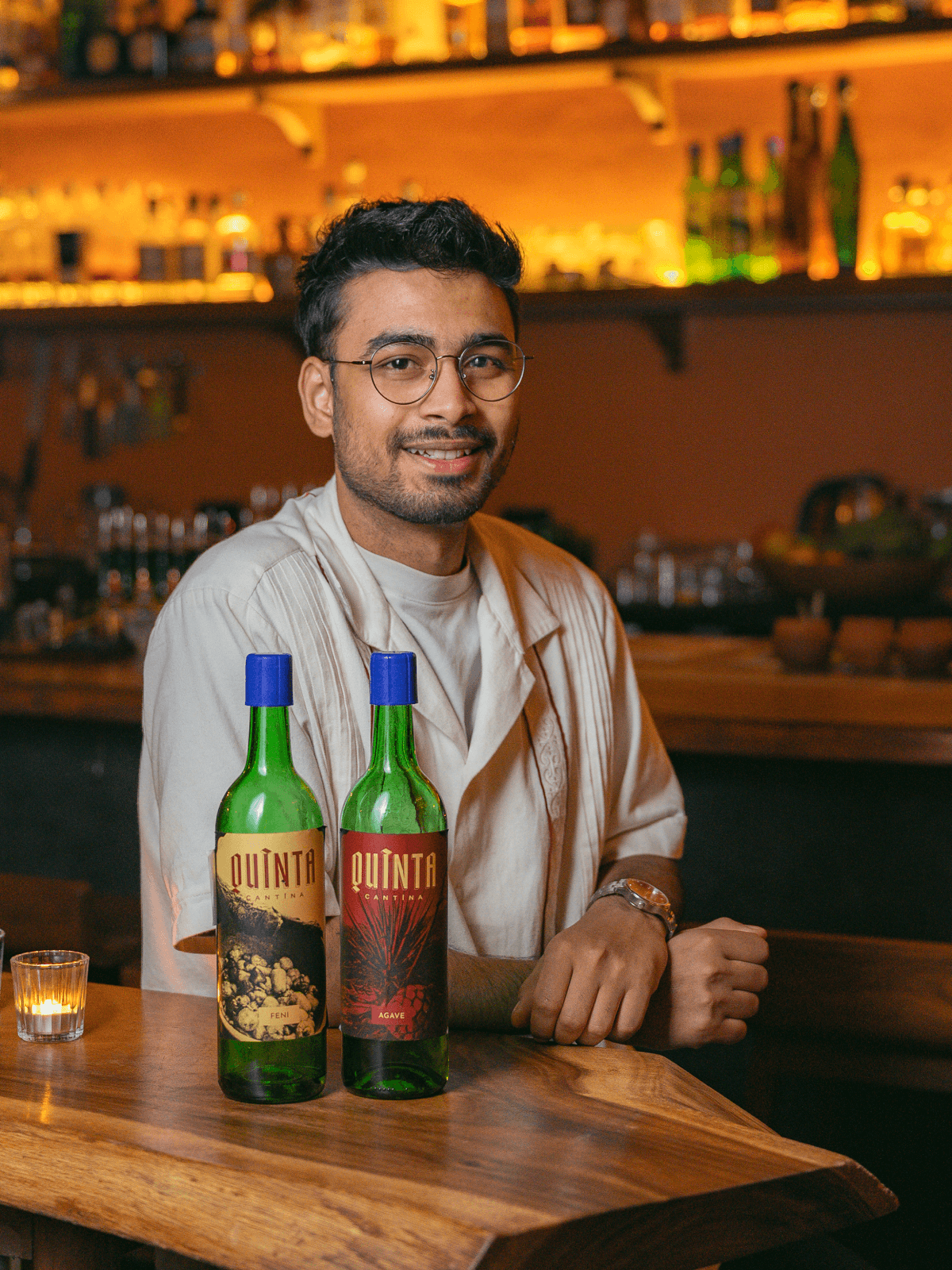
- Name – Uttkarsh Anthwal
- Instagram – the_sip_sage
- Favorite Cocktail – Pina Colada or a Pisco Sour. He says he is “very easy” in terms of his drinks, and wherever he goes, if there is a version or variation of a Pisco Sour on the menu, he will definitely go for it.
- Favorite Non-Alcoholic Drink – Coke, specifically after a very good meal.
- Industry Experience – 5 years
Uttkarsh Anthwal’s journey into bartending did not begin with a lifelong plan to stand behind the bar, but with a very simple and immediate desire to find a skill-based path that could help him get a job early. After completing his schooling as a PCM (Physics, Chemistry, Maths) student, he found himself in the kind of confusion many young people experience, where every option seemed possible but nothing felt clearly mapped out, especially when he looked around and saw relatives following very different routes, from MBA to engineering to government job preparation.
At that point, what mattered most to him was not spending too many more years studying without direction, and because he wanted to start working as soon as possible, he was naturally drawn to anything that seemed practical and employable.
It was during a casual day in his hometown of Lansdowne, Uttarakhand, while playing football with friends, that he first heard about hotel management from a friend’s elder brother, and the moment he was told that it was a one-year diploma course that could lead to a job, he made up his mind almost instantly.
At that stage, neither he nor his family really knew what hospitality management involved, but he enrolled, met the principal, and learned that the course would expose him to four departments — front office, F&B, kitchen, and housekeeping — before industrial training. Initially, he was more inclined towards the front office because he was told he spoke well, and he even began studying the way receptionists and front office managers communicated, slowly building an interest in hospitality, though not yet in bartending.
The turning point came during his industrial training in Jaipur, when he was on banquet duty and saw the late Pankaj Kamble doing flair bartending behind the bar. For Uttkarsh, this was the moment that changed everything, because he was not just watching someone make drinks, but watching someone smile, make people smile, entertain guests, and create an atmosphere around the bar with energy, skill, and craft. Until then, he knew alcohol existed, but he had never thought of bartending as a serious career, and seeing that performance in real time gave him the spark he needed.
After completing his training, he went to Kuldeep sir in Dehradun, told him clearly that he wanted to pursue bartending, and from there he found his way into the industry, beginning with his first job in NCR.
What has changed most in Uttkarsh’s thinking since then is his understanding of what bartending really means. In the beginning, like many young bartenders, he believed the job was mainly about making good drinks, presenting them well, handling bar management tasks like cleaning and inventory, and making sure orders were executed properly.
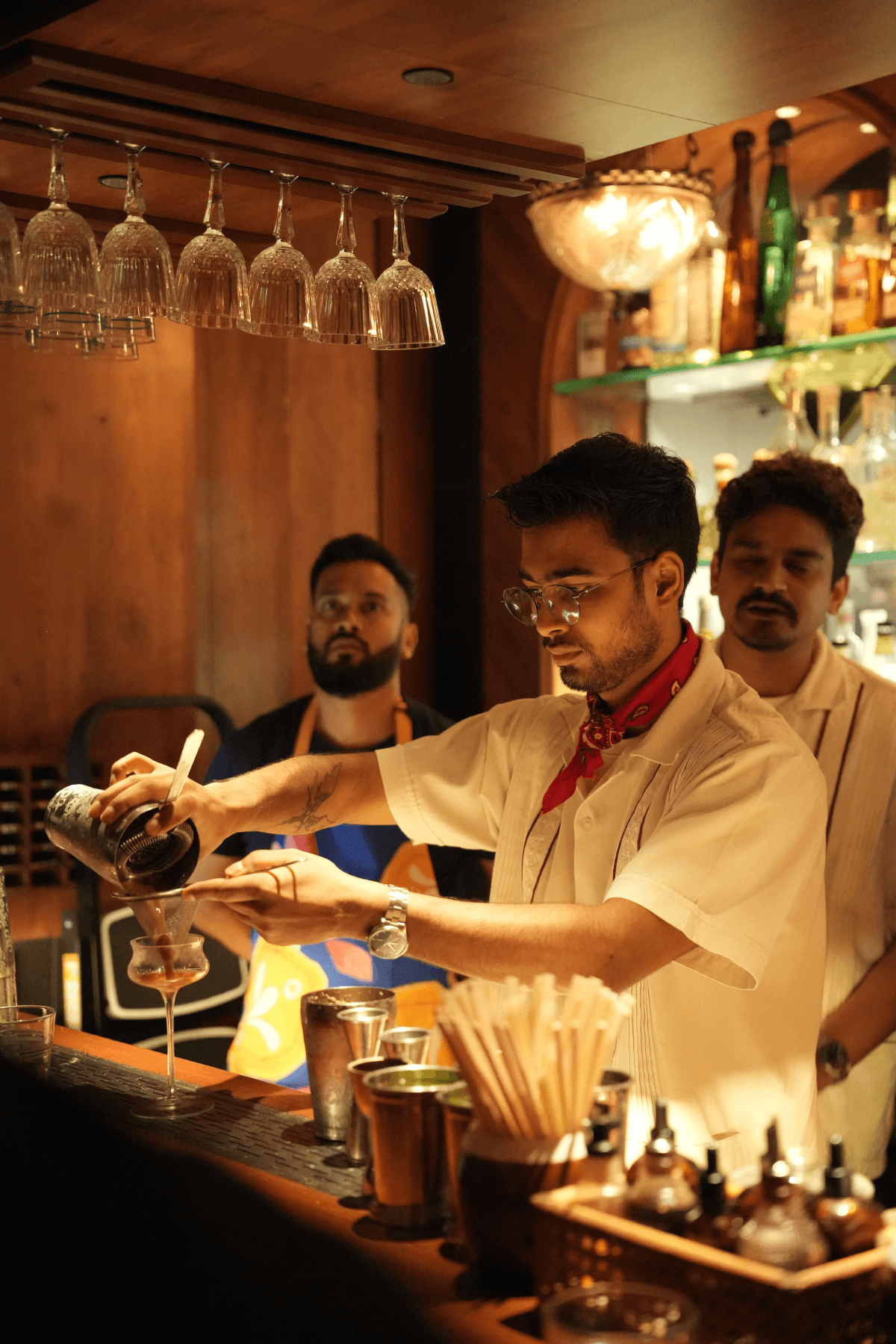
Over time, however, he realised that bartending is first and foremost an extension of hospitality, and that before the drink comes the guest, the ambience, the welcome, the interaction, and the feeling a person carries when they sit at the bar. For him, if there are no people, there is no point to bartending, because the profession is rooted in hospitality and human connection.
The same simplicity and clarity can be seen in the way he approaches ingredients and flavour combinations. Uttkarsh says he likes to keep his ideation simple, not extreme, and most of his drinks are inspired by classics, often built as riffs or reworkings of familiar structures.
He prefers ingredients that people can relate to, but likes to use them differently, whether that means coffee in a way that is not an Espresso Martini, or familiar notes like passion fruit, yuzu, or pineapple presented with more finesse. His thinking is straightforward: cocktails are ultimately made for people, and if guests cannot connect with what is in the glass, then the drink has failed its purpose.
A defining phase in his growth came with his move to Goa, which began as a short visit but turned into an extended working experience. Goa exposed him to a wider spectrum of tropical ingredients, local spirits, and a more aware and engaged drinking audience that values both flavour and craft. He highlights how guests in Goa are open to trying new things, knowledgeable about their drinks, and interested in engaging with bartenders, which pushes professionals to elevate both their technical skills and their communication. The bar community in Goa also played a significant role, with frequent gatherings, bar takeovers, and interactions with international bartenders, allowing him to observe global techniques and understand how different styles translate within the Indian context.
When speaking about modern Indian bartending, Uttkarsh sees an industry that is expanding rapidly in both technique and intent. He points out how bartenders today are experimenting more, adopting advanced equipment, building in-house labs, and working with processes such as distillation and fermentation to push cocktail innovation forward.
At the same time, he emphasises that India’s strongest foundation remains its hospitality, rooted in the idea of Atithi Devo Bhava, which continues to define how guests are treated across bars. Even in high-pressure environments, bartenders are making the effort to engage, understand, and personalise the guest experience, and according to him, this balance between technical evolution and deeply embedded hospitality is what sets Indian bartending apart on a global stage.
Competitions have also played an important role in his journey, not just as platforms for recognition but as spaces where the bartender community comes together, exchanges ideas, and pushes each other to improve. They provide visibility, foster connections, and create opportunities to grow both personally and professionally within the industry.
Three years from now, Uttkarsh hopes he may be able to open his own bar, though he speaks about that dream with realism, fully aware that it demands both patience and sacrifice. Until then, he wants to keep learning, keep working, and keep growing behind the bar. His message to young people entering the industry is equally honest: hospitality is hard, the shifts are long, and the rewards are not immediate, but if one stays with it, the industry can give back in ways that are both personal and professional.
For Uttkarsh, bartending remains one of the hardest jobs, but also one of the most enjoyable, because it surrounds you with music, people, energy, and the constant possibility of connection.