Name of the Product/Brand: Three Fields Vodka
Instagram: @threefieldsvodka
Company Name: Indie Brews & Spirits
Co-founders: Olson Pereira and Isaac Vivek Mani
Olson’s Instagram: @eye_of_a_bartender
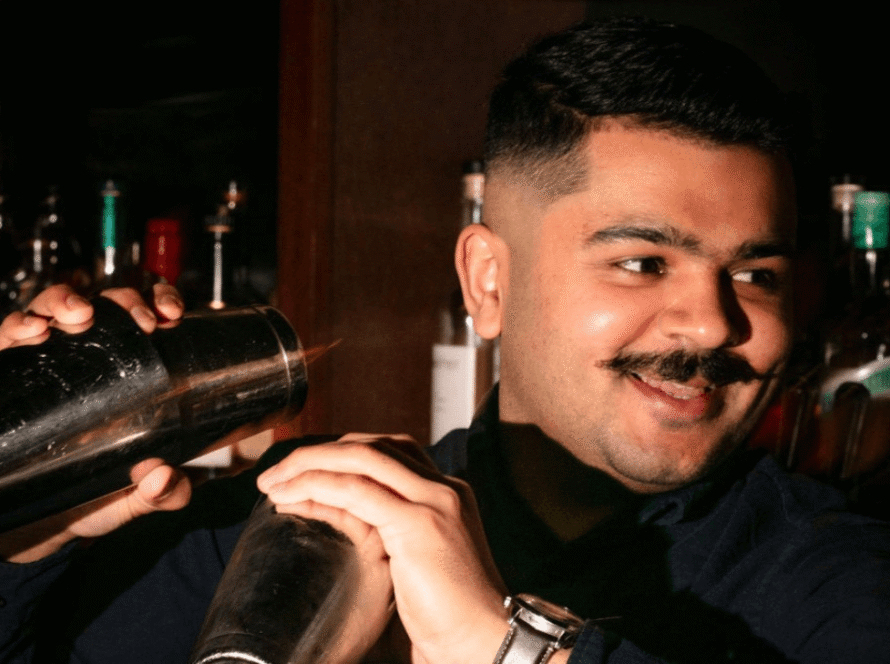
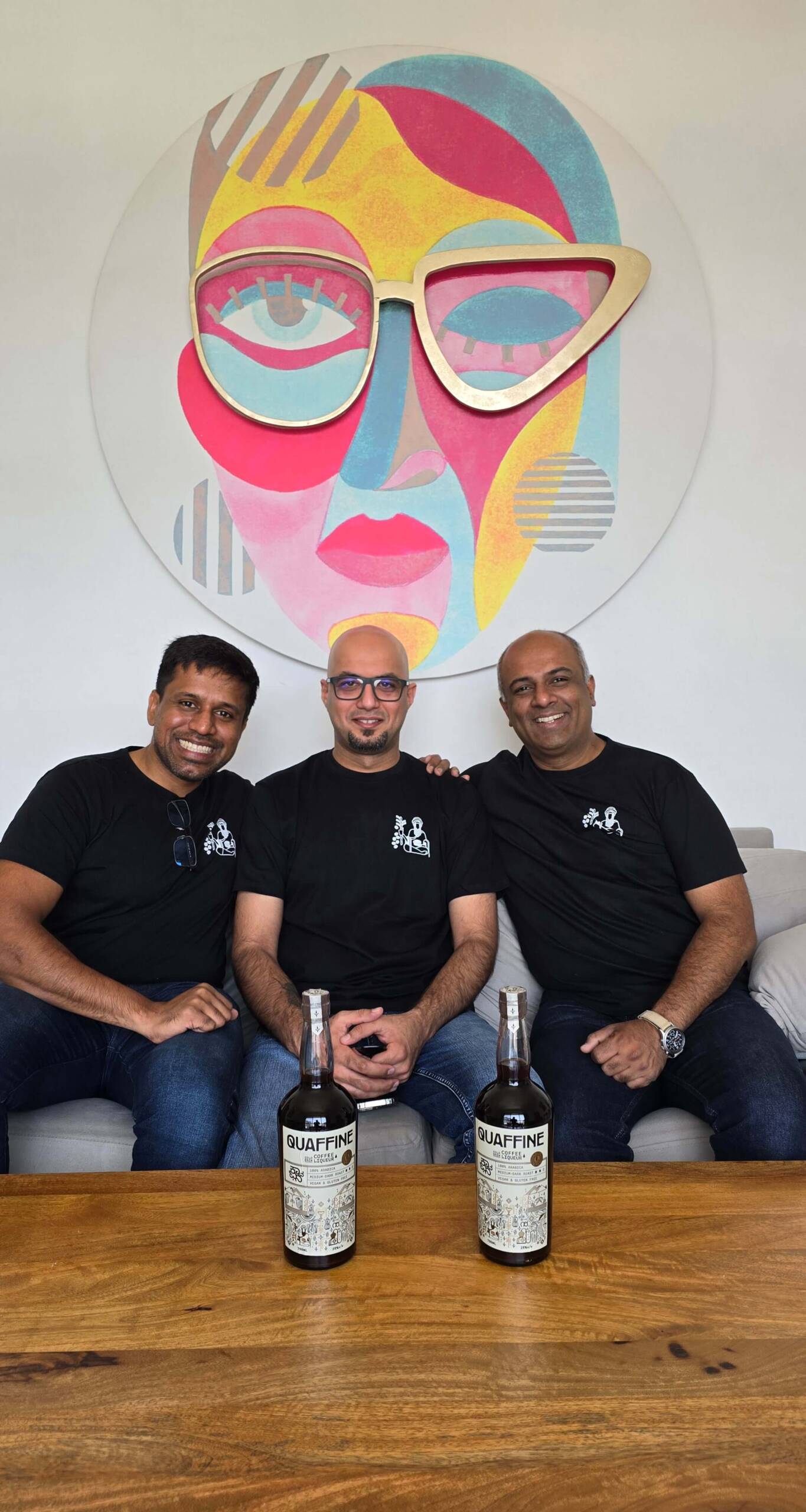
After the smashing success of Quaffine, India’s first homegrown cold brew coffee liqueur, founders Olson Pereira and Isaac Vivek Mani have now launched a new product — Three Fields Vodka, India’s first vapour-infused coffee vodka. They asked a simple question —Why add coffee flavour to your vodka when you can infuse it?
After 3 years of rigorous testing of several small batches, the Three Fields Vodka was born. We got into a conversation with Olson to ask him about his new venture, the intricate process that goes into making this delightful new concoction, and what he sees for his company in the horizon.
“One thing we lacked was the vodka,” Olson said while telling us about how he wanted his company to dominate the Espresso Martini space. While they were ruling the coffee liqueur space, the founders realised that a great coffee vodka was missing in their repertoire. It was easier to sell a coffee vodka after becoming a major player in the Indian coffee liqueur market.

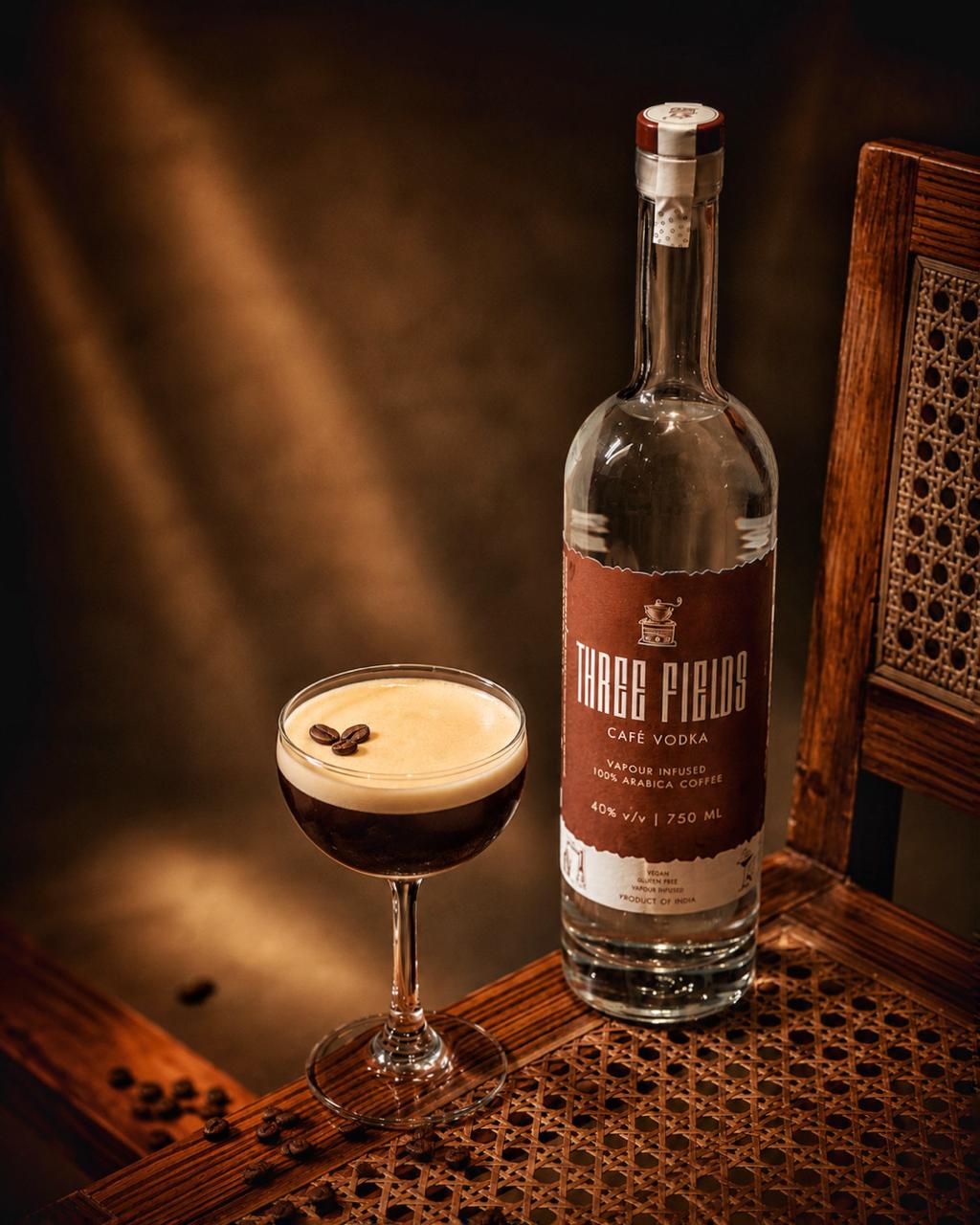
Unlike other vodka manufacturers, Three Fields does not enhance their coffee flavour by the process of compounding i.e., adding a flavour note or profile to amplify the overall flavour of the finished product. Through a process called vapour-infusion, ground medium-dark roasted coffee is placed in the botanical basket and allowed to interact with the alcohol vapors. To keep the high quality of the drink intact, Olson only produces small batches of about 55 cases.
Drawing from the connections the founders made with coffee estate owners while producing Quaffine, the 100% Arabica coffee beans are hand-picked from Chikmagalur. The green beans are then roasted to perfection by a speciality roaster based out of Mumbai. The roasted and grounded beans are then packed into bags that are sent to Goa where Olson and his business partner, Isaac, start the distillation process in a still. It takes 2 hours and 45 mins to get the collection. And then they pick the cuts.
“My concept or philosophy is very different,” he explains, “If I cannot drink it, I will not put in the bottle — simple as that.” Olson tastes every half bucket he collects to ensure the pristine quality of his product and its fine taste remain unchanged. A touch of sugar is added to elevate the mouthfeel and becomes a glue that holds all the elements of the drink together.
How can we enjoy the Three Fields Vodka besides it being mixed into an Espresso Martini? Olson says you can make a Three Fields café highball, savour it as is with a generous measure of it on the rocks, add it in your Litchi Martini cocktails, make it a part of a Café Cola or even pour it in a Skinny Baba (café with ginger ale) or a Sonic. The possibilities are endless and simply limited by a bartender’s imagination!
But creating this heavenly spirit came with its unique set of challenges. Firstly, the founders needed to place their product in a basket where there are already 35-40 different vodkas there. Secondly, they realised it takes time and patience to build a brand and reputation in the market. Thirdly, they were hard-pressed to make a cheap Vodka to cater to the price-sensitive consumers in India. But, Olson says, they didn’t want to compromise on the ingredients and the quality of the final product. “Good things cannot come cheap,” he reveals.
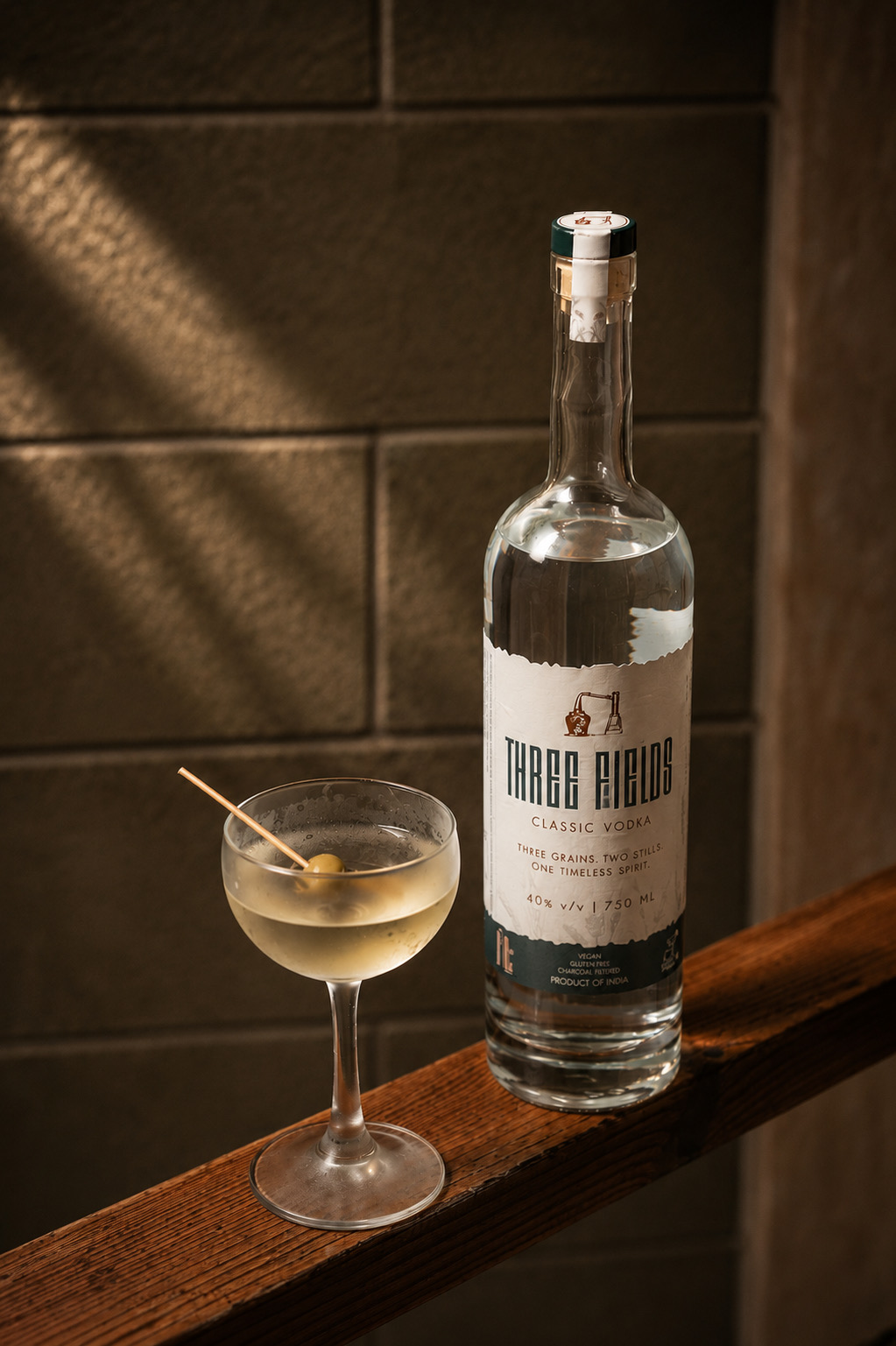
Lastly, and perhaps the biggest challenge they faced was — making the product the king. It took time, meticulous testing, and a commitment to never compromising on the quality of the finished product to get here. The brand gets its name, Three Fields, from the fact that it derives its spirit from three grains — rice, wheat and barley.
So, what’s next for the company after the launch of two fine beverages? “Coffee is gaining a lot of traction in the country,” Olson answers, “It’s important to stay true to the category, to the particular style of spirit you’re launching.” They may launch a portfolio of spirits that stays true to the history and the technique of making that specific spirit. We’re looking forward to seeing what they come up with next!
- Nemisha Sharma